Click on links below to jump to content
Gert H. Wollheim‘s Art of the First World War

Dusseldorf, Stadtmuseum, inv. no. SMD.C 4554 © Jutta Osterhof.
The first phase of research explores the documentary nature of the artist’s wartime drawings made on the eastern and western fronts of World War I, and his post-war graphic work and paintings. Wollheim is among those German artists whose documentary or memorialising pictures of that war have received much less attention from scholars than Otto Dix, George Grosz or Max Beckmann, for example. Yet, Wollheim’s portrayal of himself and his comrades as victims of war, both during the war and after, were highly unusual and against the dominant imperialist-nationalist model of soldiery, which persisted long after the war years. Until at least 1924, he produced an important body of antiwar paintings and graphic work. Their loss and destruction have caused the artist to be much less studied; yet, surviving works and those that survive in illustrations, reveal a powerful antiwar voice in early twentieth century art, which focuses first and foremost on the suffering of individuals in war, combatant or not. The research, based on archival and primary research, as well as examination of the original works in both private and public collections, also takes into account the artist’s writings, contemporary critical reviews and commentary by individuals who personally knew the artist. Part of this first phase will be published in the book chapter, ‘Portrayals of Suffering in Gert Wollheim’s Pictures of the First World War’ in Has anything changed? The visualization of war violence in a diachronic perspective, ed. by Ioannis Mylonopoulos and Nikoleta Tzani (forthcoming, De Gruyter, New York, 2025).
The second phase examines the drawings and paintings that documented his experiences in France during the Nazi Occupation, some of which were completed while he was an inmate in Gurs Internment Camp in southwestern France. This research will bring to light a much more comprehensive understanding of the artist’s work during the Nazi years, where the artist documented events inside the internment camp, his experience as a fugitve after his escape, and reflective work after his arrival in New York in 1947. Back to top
New research on German artist Willy Jaeckel’s Images of the First World War

My research on German artist Willy Jaeckel (1888– 1944), the creator of the important antiwar portfolio Memento 1914/15 (1915), has uncovered an all but forgotten legacy of outstanding graphic works published during the First World War, which is being assembled for a detailed study that for the first time takes into account all of the artist’s traceable wartime pictures.
I will introduce this new research in the forthcoming article, ‘Willy Jaeckel’s Representations of Soldiers as Victims during the First World War in Germany‘, in: Soldier Victim, a special issue of the Journal of Aggression, Conflict and Peace Research ed. by Stratis Efthymiou (expected Summer 2025).
The article analyses the artist’s unusually direct, realistic representations of the soldier as a victim of war, assessing their role within German visual culture of the First World War. Jaeckel’s public exhibition and reproduction of his relatively confrontational work in periodicals from early in the war offered an alternative, empathetic visual language that was at odds with the generally morale-preserving, even jingoistic images of the war years, which promoted a narrow dialogue of both the modern front experience and the human ability to endure it.
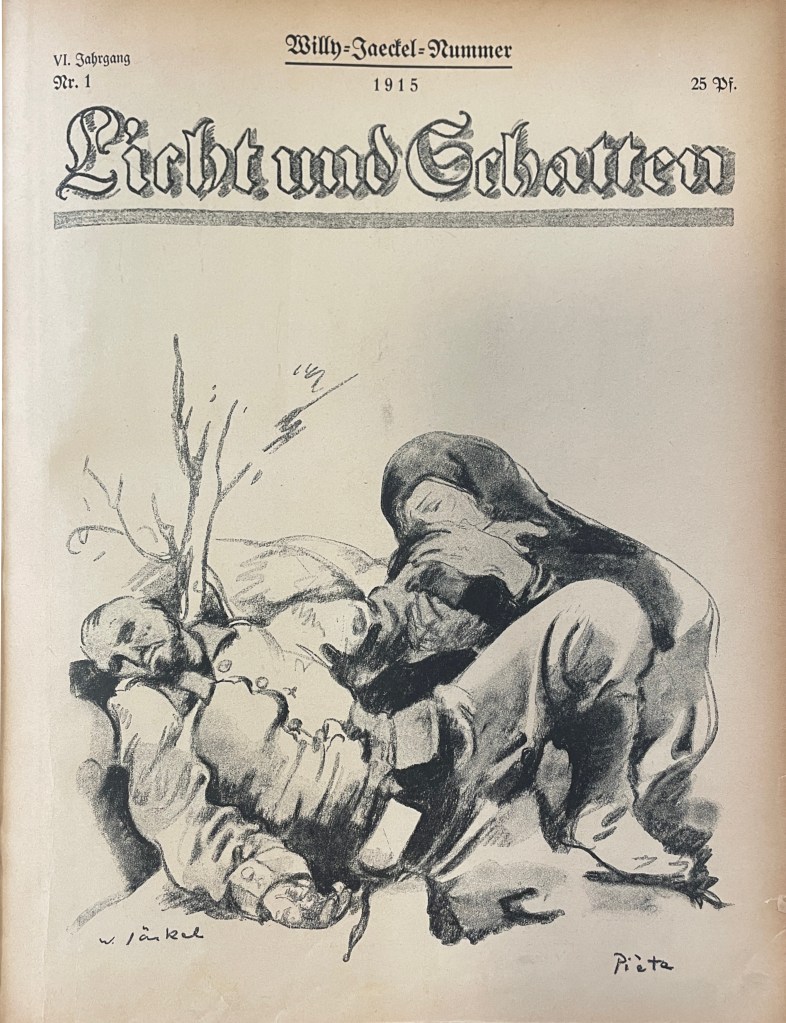
The analysis is based on careful examination of the works in their original form (in the case of surviving works) and their reproduction in wartime art periodicals, in addition to careful study of wartime visual culture in Germany, Jaeckel’s wartime letters and contemporary critical reviews. Thus the article provides insight to the artist’s intentions and the works’ engagement with wartime visual culture, while the relationship of Jaeckel’s work to that by other free-thinking artists and German wartime art generally is also considered.
Jaeckel’s work is shown to be among the very earliest and most unique of the entire war in its singular focus on the suffering of soldiers. It was courageous – and remains relevant – in its contestation of the popular image of the front experience that played down the shattering impact of the war on soldiers’ bodies and minds. Back to top
Richard Meaghan’s Reformed Masculinity: Responses to Otto Dix’s imagery of militant masculinity in contemporary presentations of physical illness
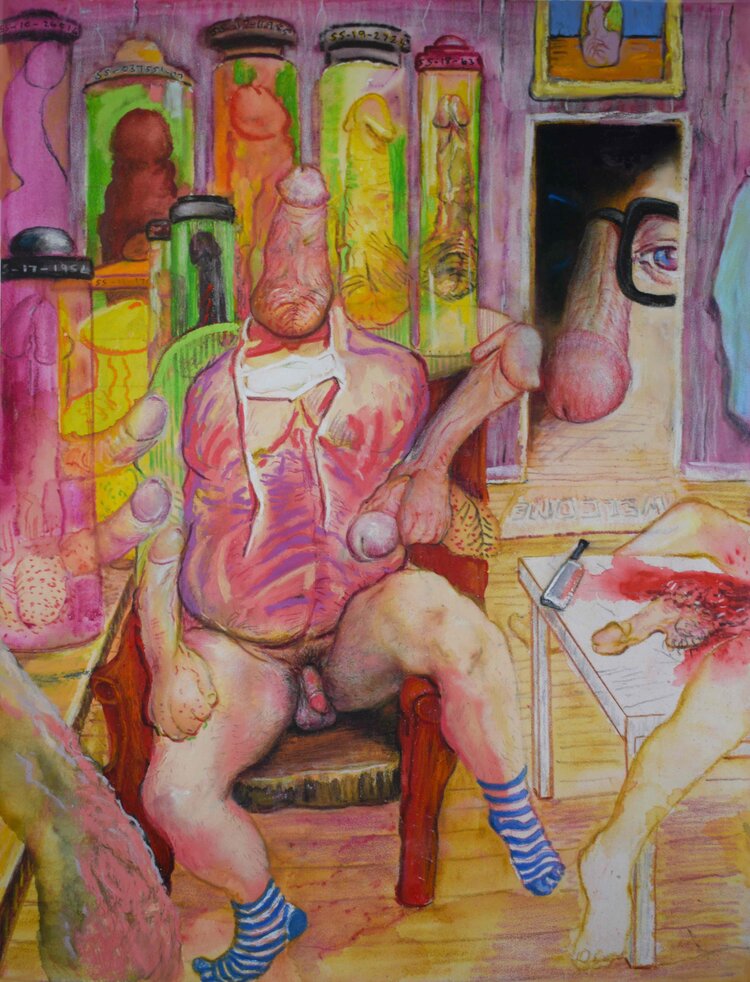
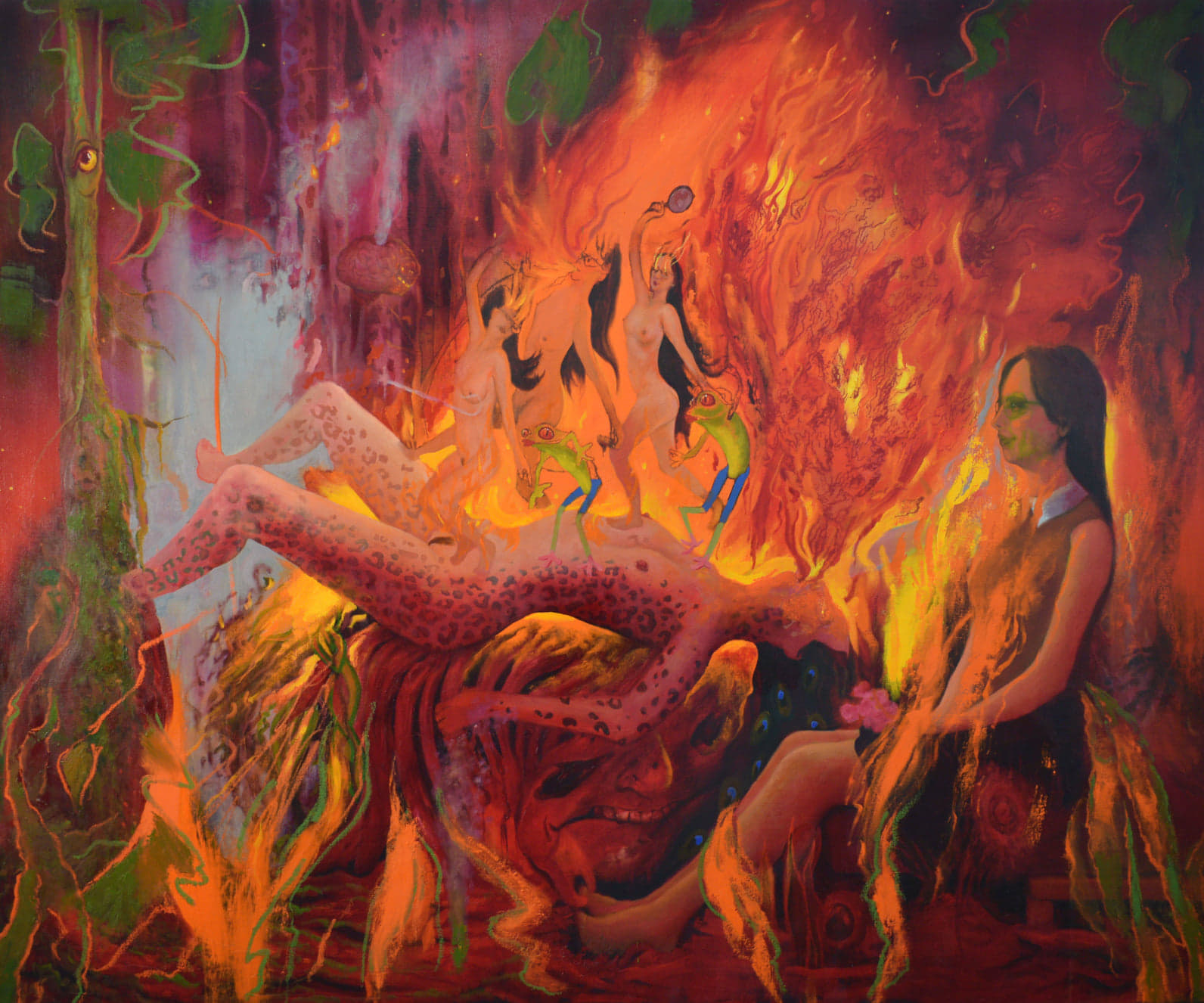
This research, in direct collaboration with the artist, reflects on a selection of recent work by contemporary British artist Richard Meaghan in which I treat how his exploration of illness, personally experienced, reflects both the artist’s personal responses to the portrayal of masculinity in post-World War I art and persistent challenges to a truly pluralistic, heterogeneous masculinity in contemporary society. Meaghan took as a starting point, among other things, Otto Dix’s pictures of injured and disfigured soldiers, created in the years following World War I. The soldiers’ broken bodies were representative of a ‘reformed’ masculinity, as I call it, which laid bare the farcical quality of images of idealised, heroic masculinity that however persisted well into the postwar years. Aware of how the disfigured soldiers in Dix’s works reflected a lack of understanding or care for the fate of injured soldiers, Meaghan could reflect on how current popular perception of prostate cancer mirrored attitudes to injured or disfigured men in the post-World War I years: the physical consequences of injury also caused psychological suffering, which at the time was widely overlooked or not understood. Today, prostate cancer is a disease which is only slowly becoming perceived for what it is: an often life-changing illness that can have severe impact both physically and psychologically, through its impact on the sufferer’s sexuality and sexual well-being. The artist’s confrontation of established tropes of masculinity/male sexuality challenges established perceptions of male experience, stubbornly entrenched in society despite efforts to diversify them. This work reaches far beyond personal experience in how it calls into question the passive, even dismissive, attitudes in the health services as well as society at large, with regard to the disease’s potentially devastating effect on the body and mind. At the time of writing (1 July 2025), some of the artist’s work can be viewed here: https://www.visitlincolnshire.com/events/richard-meaghan-exhibition/


 Dr Ann Murray